
by: Joel Bates“If you’re going through hell….keep going.” They were powerful, prompting words when Winston Churchill spoke them to his beloved Englanders at the height of WWII; they are no less pressurized and prudent for us today—dramatic words for desperate times. Their import came to mind midsummer when one of the Discovery Ministries’ wilderness instructors came to me after a long series of retreats and expeditions and with many more still slated on our summer calendar. He asked, “How do I do the middle?” I felt confused at first until he explained further, “I love new beginnings, and I feel the euphoria of finishing, but how do I keep going when I’m tired, there’s so much left to do and, frankly, I feel like giving up?” 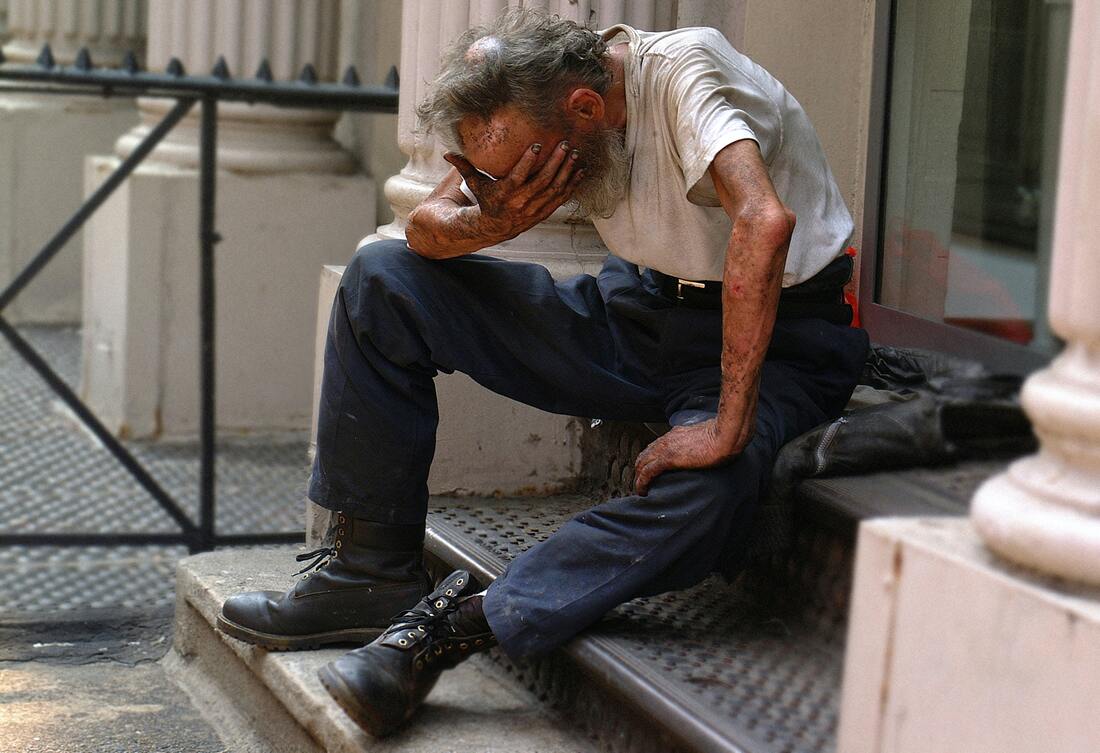 Maybe you can relate. As I thought about his question, my mind went quickly to the life of Moses. Of all the great characters in the Bible, Moses may have had the longest “middle” to deal with. Think of it, he led all those grumbling Israelites for over 40 years! They didn’t know how to fight their enemies. They didn’t have a form of government. They had no economy, no real laws, and no true identity. They were a people who only knew how to be slaves. Moses was called by God to lead them, teach them, and show them the way across the desert to the land flowing with milk and honey. Boy, did he have his hands full! So much so, that more than once he shook his fist at them, wrung his hands of them, and asked God to just kill him to make it all stop. It had been a tough existence to be sure, but there was light at the end of the tunnel. They would send spies into the Promised Land, mount an offensive, and take possession of their new homeland. Great plan, terrible execution! Once these former slaves saw the size of their opponents, they completely lost sight of the enormity of their God. Though Moses prodded them and Joshua and Caleb pleaded with them, they acted like a stubborn mule refusing to obey. That’s when “the middle” happened--the long years of wandering in the dry and withering wilderness. Proverbs 13:12 says, “Hope deferred makes the heart sick,” and I’m betting that Moses felt downright nauseous after being within grasp of fulfilling his difficult calling only to watch it slip away like an apparition. Sadly, the people’s spiritual sickness would last for forty more years as God remained faithful to the children, but firm in barring the rebels’ way to their own country. It’s a melancholy outcome with which I’m sure your familiar, but what’s the point? Fast forward a few decades, four to be exact, and witness Moses giving his great farewell speech to the children of those disobedient slaves. Moses knows he’s not going with them, but his parting words as recorded in the book of Deuteronomy are nonetheless poignant and powerful for both that generation and ours. He is at his end, and he’s exhorting the people as they face a new beginning, but some of his finest entreaties come from his experiences of living life through the long, hot, mundane desert days, the seasons where the answers came in vague, intermittent whispers while languishing under the pressures of leadership and preservation--in essence, “the middle.” Moses gives hearty advice for doing more than subsisting through the mundane. It’s the second, most commanded duty of the believer as recorded in scripture, and Moses referred to it over 14 times in the book of Deuteronomy alone. “Remember!” Moses unpacks this key ingredient for making it through by reminding us of the importance of looking back. Remember where you came from. Remember who you used to be. Remember your first encounters with mighty God. Remember what it was like to be enslaved. Remember what God has promised. Remember who is in control. Remember how God has proven his faithfulness to you. Remember, remember, remember! Times of remembering are a powerful catalyst, especially when they help aid your forward momentum. However, remembering former experiences can cause one to dwell too much in the past. So, another essential ingredient for making it through “middle” times is to remain in the present. I’m not talking about honing in on the present circumstances with a fixation that gives you tunnel vision. That is not living in the present; that is paralysis. I’ve led a lot of challenge expeditions in which the participants set themselves up for failure simply because they lose focus on the present challenge, going instead to one of two rooms: a happy place where they escape to comforts and securities or a dark place where they obsess about their sufferings and discomforts. Neither place leaves them with the truth. No, Moses says to stay focused on what’s real, right now. He utters the word “today” over fifty times in one speech, “I have commanded you today,” “You are alive today,” “You will cross over today,” “I warn you today,” “God goes with you today,” “You are standing today,” “The Lord has made a covenant with you today,” “That He may establish you today,” “See, I have set before you life and good, death and evil today.” When going through “the middle,” we must discipline ourselves to accept today, rejoice in today, grieve about the losses of today, count up the blessings of today, live hopefully today with expectations of the good that will come tomorrow. Moses doesn’t just look back and look around, he is also looking ahead. The children of Israel have endured a long, arduous “middle,” but there is hope on the horizon. Soon they will walk across the Jordan’s parted waters, conquer the land, and settle in their promised inheritance. It is an already-but- not-yet moment. The plan has been laid, the promise given, and now all that awaits is the faithful people of God to live it out. Moses appeals to their future as he exhorts them to look back at how far they’ve come, look around at the facts of Yahweh’s faithfulness, and charge ahead for the conquest of a blessed home and a bright future. For believers, our hope is always right in front of us. At the heart of all his yearnings for the people, Moses simply wants them to choose life with God, to fix their eyes on Him, to follow Him faithfully and find relationship with Him as people with a special name and a favored identity. Sound familiar? Hebrews 11, 12 and 13 remind us—the people of promise—to remember the valiant from the halls of faith, to throw off the hindrance of sin as we run forward in our race of faith, and to fix our eyes on Jesus and think ahead to that great day when, “Jesus, who is the same yesterday, today, and forever,” makes us permanent citizens of a city that will never fade, all because we “did the middle.” Today, if you find yourself “stuck” in the middle, lift your head and count your blessings, for it is often the case that after we finish the journey and complete the task when we look back on the story it’s in the middle where we find that God was closer than ever, carrying us through. “For no prophecy was ever produced by the will of man, but men spoke from God as they were carried along by the Holy Spirit.” 2 Peter 1:21
3 Comments
by: Leah FullerIn my hammock beside a babbling brook, I was basking in the sun’s early spring warmth deep in the woods. I had set aside the day to be alone with my Savior, and yet my heart was full of trepidation and angst. My mind raced with worries over the present and future: Will He meet me here? Will I sense His presence or hear His voice, or will He be more aloof and silent this day? Does it matter how God interacts with me? Is it enough for Him to know that my intention is to spend time with Him regardless of what that looks like? And how do I release all of these anxieties that I can’t control anyway into His hands and dwell in peace today? I don’t know about you, but I wrestle with these kinds of thoughts nearly every time I seek to retreat into solitude. I think the enemy takes note that we are entering into sacred space with our Father and is desperate to discourage us. He would deny us any opportunity to truly listen to God’s heart of love for us. Yet resisting him, I boldly proceed despite the doubts and fears that assuage my soul. That particular day filled me with delight at God’s beauty and warm sunshine that had beckoned me into the wild. But as I sat in my hammock reading scripture, praying, and journaling, my heart remained in a funk, cold. Frustrated and unable to shed the shroud, I decided to go for a walk. With no particular destination and no trail to follow, I meandered along the banks of the brook, just watching the water wind its way down its narrow path. Some rock outcroppings up the hill behind me drew my attention, and I headed that way to cave hunt. Alas, I found no caves as I stumbled along, tangling myself in a few briar patches on my search. I wandered along the hillside toward a small ravine, but just as I was about to head back down to the creek, something bright on the other side of the ravine caught my eye. My spirit lifted, thinking that maybe God was illuminating the glistening entrance to a cave or some other treasure just for me to find. However, as I peered in that direction, desperate to see what it was that had caught my eye, my heart sank when I realized my thrilling discovery was only a large piece of trash glistening in the sun. My shoulders sagged; tiredness seeped in, and I turned away from the ravine. I felt anger begin to swell within me. Why would someone leave behind something so ugly in a place so beautiful? It was a desecration, and I wanted to get away from it. I had to escape from this intrusion to the serene landscape! But when I had taken only a few steps down the hill, something shifted in me. I turned with determination and started making my way to apprehend the offensive debris. With determined steps, I quickly reached the creek at the bottom of the ravine, but suddenly a sparkling, hidden waterfall arrested my progress. Rising only a few feet, the waterfall glowed green with moss as the water tumbled over the edge into the small clear pool at my feet. Just think, had I not been looking to remove that little piece of trash, I may not have seen this delightful beauty! It lay hidden off the beaten path and likely went unnoticed by others. What a gift to my spirit in the midst of the desolate funk I had brought to this valley! After a long pause, I continued on my way to the vine hanging from a tree that had captured the trash. To my amazement, though, it was a balloon…way out here, miles from any dwelling! I pictured a child holding this balloon on a string and the wind taking it from her hand. It had floated away—how far I have no way of knowing, but it rested here. Was it really as unsavory as I had initially judged? Surely the balloon had been a treasure, bringing joy and laughter to an exuberant child. As I picked up the balloon and folded it into my pocket, I noticed just inches from where it had lain two or three, tiny, purple flowers, turned their faces toward the sun and pushed up through the brown leaves. I couldn’t take my eyes off of them. As I looked along the hillside, I became aware of the many tiny flowers peeking through the leaves to remind me that God plants beautiful things in oft hidden places. 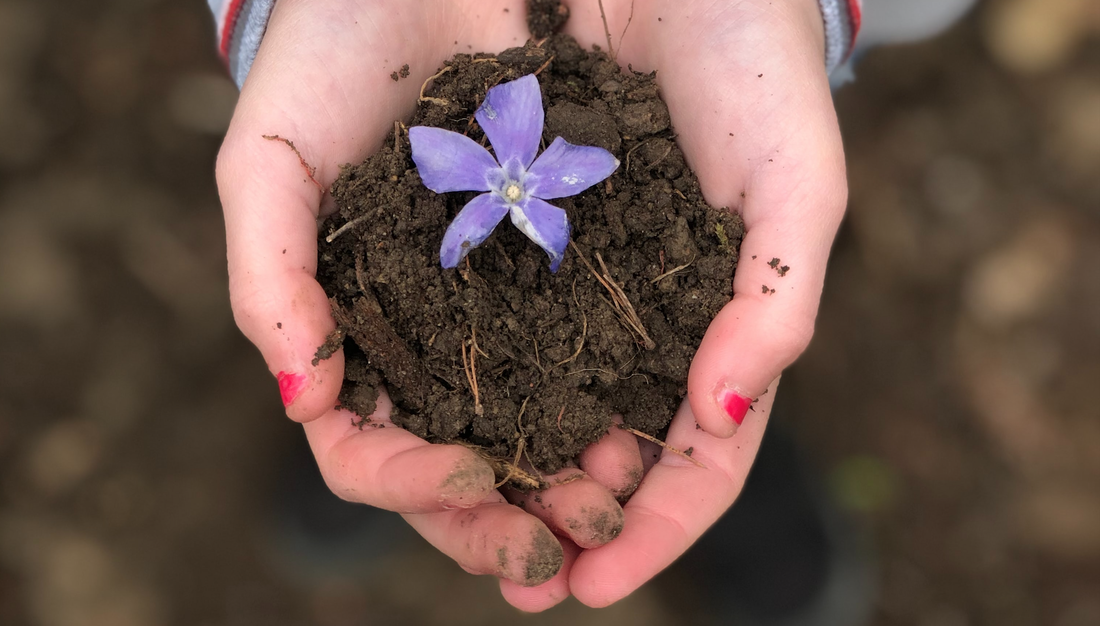 Slowly light began to dawn in my soul. I realized that I approach the marred places in my life story in much the same way that I had approached that lowly balloon trapped in the vine. When I notice sin or struggle or strife, my initial response is judgment. I want to reject it and get away from it as quickly as possible. But what if…what if those places within that we try so hard to hide from ourselves and others actually might lead us to something deeply beautiful?
The beauty of the waterfall and the flowers was not something that I had the power or the ability to create, but God in His goodness, wisdom, and power did create them. Then He opened my eyes to see them, all because I was willing to go take a look at the undesirable thing that, from my perspective, had flawed the landscape. What grace for Him to use that which I want to avoid to reveal the beauty of His kingdom—a beauty and goodness that also dwells within me, as one who bears His image! I can become so focused on the worries and anxieties that blemish my perspective that I miss the greater picture of His kingdom intersecting with my earthly woes. Thank you, God, for such an opportunity to shift my eyes to Your ongoing work of healing, restoring, and beautifying that which has been lost or hidden from view. Right here is a glimpse of eternity and with it the hope of Your care for us in desolate places! “And why are you anxious about clothing? Consider the lilies of the field, how they grow: they neither toil nor spin, yet I tell you, even Solomon in all his glory was not arrayed like one of these...But seek first the kingdom of God and his righteousness, and all these things will be added to you. Therefore do not be anxious about tomorrow, for tomorrow will be anxious for itself. Sufficient for the day is its own trouble”. – Matthew 6:28-29, 33-34 by: Joel BatesSometimes in order to really get your point across you have to go through the pain. I was 8 feet off the ground and the landing looked reasonably soft so when one of our new summer interns claimed she had me on belay, I decided to put her to the test by falling. As I hit the ground hard, the dull pain in my back caused me to question the wisdom of my tactic. I shook off the pain and tried to keep the anger at bay as I rolled to my feet. The group of surprised summer staff came to my aid asking if I was alright, everyone that is except for Bekah. She stood in horrified paralysis as the climbing rope lay limply at her feet. She was fully aware that she had failed miserably at belaying me from a fall. Still shaky, I re-explained with intensity how to belay someone, making sure you take up all the slack preventing a grounder. Though the instruction was painful for both of us, I knew she would not forget the lesson. 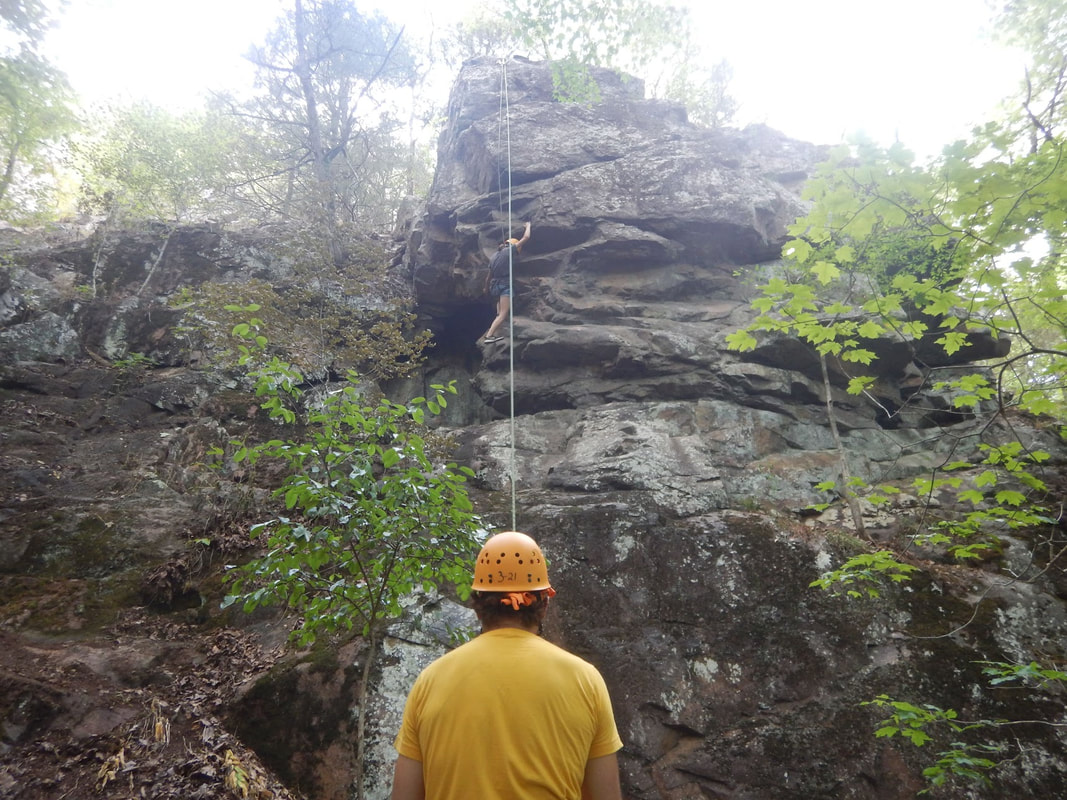 A few weeks later Bekah and I were at a climb-site working with a group of students. While the students were having a heyday with the thrill of rock climbing and rappelling, I noticed one of the adult sponsors eyeing the climbs nervously and trying to avoid an invitation. In a quiet moment I told her that I thought she should try to climb a route. Kathrine looked at me like a startled child and just shook her head with absolutism.
“Why not?” I asked. “I tried climbing once when I was younger and I was dropped.” “Wow, that sounds pretty scary.” “Yeah, I had to spend three months in physical therapy.” Correction, not just scary, but serious. “Would you be willing to try again?” I pressed. Kathrine looked with great apprehension up at the rock wall, her face drawn and pale. She didn’t say anything, and I let her think it through for a moment. She looked at me, her eyes glistening with emotion and fear and nodded her head. We stepped toward the climb together, the climb that Bekah happened to be belaying. I reassured Kathrine that we put the DM staff through strict and rigorous training to become more than just reliable at belaying people, the staff is trustworthy. Bekah began hooking up Kathrine’s harness to the rope going through a mental checklist. “Bekah, Kathrine needs your best effort today. She’s been dropped,” I said. Bekah froze midmotion, her hands still clutching the carabiner she had screwed shut and looked directly at me. The memory from a few weeks previous of me falling to the ground on her watch came instantly to her and I didn’t need words to know what she was thinking. “Bekah is one of our best belayers,” I said. “She has learned how to hold people tight and keep them from falling.” A slight grin formed at the corners of her mouth as Bekah resumed the climbing contract with Kathrine. Soon Kathrine had touched the top anchor and was backing down the rock. “I’m trusting you!” she said more as a warning to Bekah than a statement of fact. Bekah responded with poise and professionalism bringing her safely back to terra-firma. I side hugged Kathrine, “You really got redemption back from your traumatic experience!” I said it to Kathrine, but winked at Bekah simultaneously. They both found redemption of past traumas that day. God’s grace is like this. He’s discipling me as a beloved son, but I strike out, mess up, and drop valuable things He’s wanting me to hold. His voice is so kind, though, kinder than my own to myself, as He gently helps me pick up the pieces, put things back together and keep growing. The process He takes us through of training, grace, redemption and victory are pivotal components for making us into members of a body that is dependable, trustworthy, and able to hold others up and even hold up the name of Jesus in this world that needs to know of his victory over sin and death. If you’ve dropped someone or been dropped, there is hope in Jesus greater than your failure or trauma. Whether you relate to Kathrine who faced a fearful choice to trust again or Bekah who questioned from past failures whether she was trustworthy, King Jesus offers you redemption. |
Come along side us as we journey in and out of the wilderness, discovering our Creator in creation.
Archives
April 2024
Categories |
 RSS Feed
Contact Us
|
|